


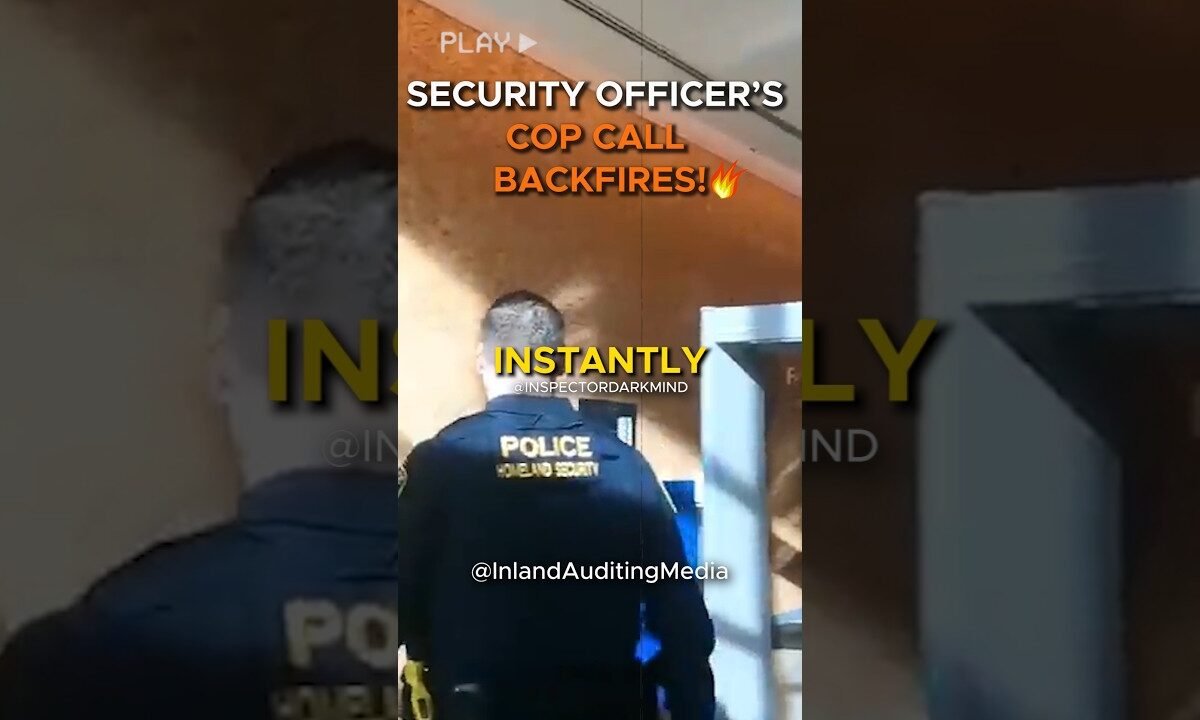
A security guard at a federal building tried to act like he could invent access rules on the spot. He told a citizen handling official business that he needed an escort, needed permission, and could not move through the building freely, despite there being no posted restriction, no marked boundary, and no clear legal basis for any of it. What starts as a routine entry into a public federal facility quickly turns into a confrontation over whether a private contractor can override public access with nothing more than attitude and invented rules.
The legal issue here is notice. Under 41 CFR § 102-74, restrictions inside a federal building are not supposed to exist as invisible, unwritten commands enforced at someone’s discretion. If an area is genuinely restricted, the public must be given clear notice through signage, barriers, controlled access, or some other official designation. A guard cannot create a roaming “restricted area” just by saying one exists. That is exactly what makes the federal officer’s response so important in this encounter. Instead of blindly backing the guard, he presses for something concrete—a sign, a rule, an actual basis in law. And once that basis cannot be produced, the entire power play starts to collapse.
What unfolds here is a textbook example of contractor overreach running straight into the limits of real law. The footage captures the difference between someone enforcing actual federal rules and someone pretending to have authority they do not legally possess. It shows how quickly these kinds of improvised commands fall apart when the person on the receiving end asks the simplest possible question: where is the sign, and what law says that?
Legal Focus: 1st Amendment (Right of Access) / 41 CFR § 102-74 (Federal Management) / Signage Requirements
Scenario: Federal Building Entry vs. Security Guard’s “Escort” Rule
Disclaimer: This footage is shared for educational and journalistic purposes to promote constitutional literacy and legal accountability. The content is intended to demonstrate real-world applications of civil rights and is not a substitute for professional legal advice.
source