


A week of turmoil unleashed by US President Donald Trump’s tariffs showed little sign of easing on Friday, with some markets again tumbling and French president Emmanuel Macron describing the 90-day tariff pause as “fragile”.
Asian indices followed Wall Street lower on Friday with Japan’s Nikkei down nearly 5% and Hong Kong stocks heading towards the biggest weekly decline since 2008. Oil prices were also set to drop for a second straight week.
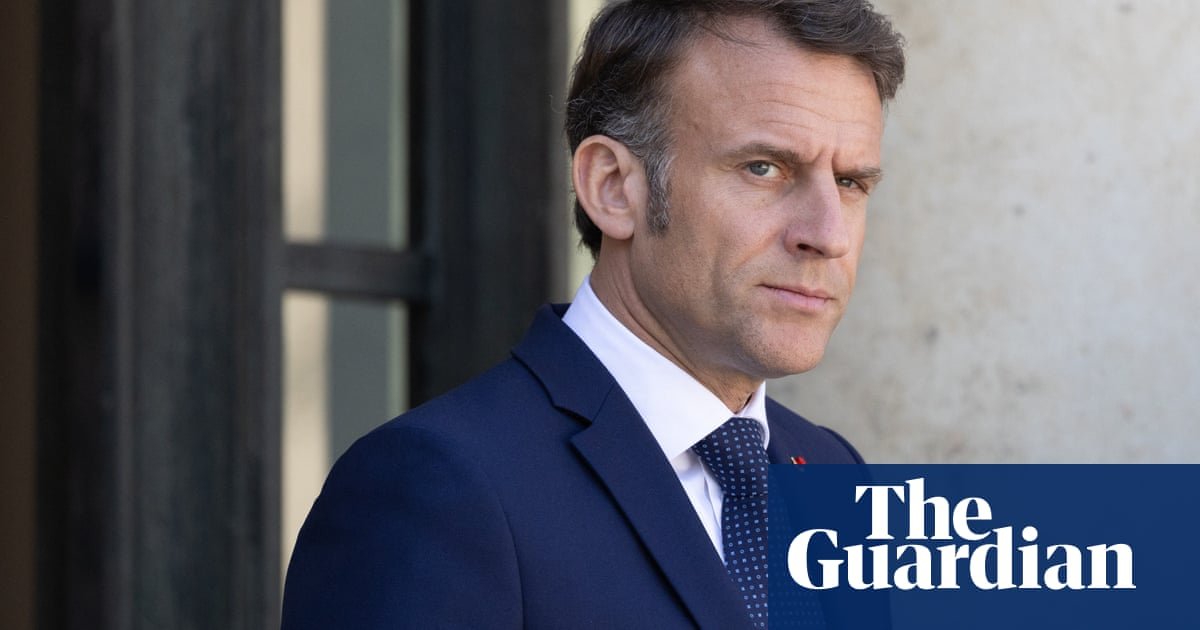
Macron wrote on X early on Friday that the partial suspension “sends out a signal and leaves the door open for talks. But this pause is a fragile one.”
He added: “This 90-day pause means 90 days of uncertainty for all our businesses, on both sides of the Atlantic and beyond.”
Battered financial markets were given a brief reprieve on Wednesday when Trump decided to pause duties on dozens of countries for 90 days. However, his escalating trade war with the world’s second-largest economy, China, has fuelled fears of recession and further retaliation.
US treasury secretary Scott Bessent tried to assuage sceptics by telling a cabinet meeting on Thursday that more than 75 countries wanted to start trade negotiations, and Trump himself expressed hope of a deal with China.
But the uncertainty in the meantime extended some of the most volatile trading since the early days of the Covid-19 pandemic.
The S&P 500 index ended 3.5% lower on Thursday and is now down about 15% from its all-time peak in February. Some analysts believe stocks have further to fall due to the uncertainty surrounding the US tariff policy.
Bessent on Thursday shrugged off the renewed market sell-off and predicted that striking deals with other countries would bring more certainty.
The US and Vietnam agreed to begin formal trade talks after Bessent spoke with Vietnamese deputy prime minister Ho Duc Phoc, the White House said. The south-east Asian manufacturing hub is prepared to crack down on Chinese goods being shipped to the United States via its territory in the hope of avoiding tariffs, Reuters exclusively reported on Friday.
China’s leader, Xi Jinping, plans to travel to south-east Asia, including Vietnam and Cambodia, next week.
Japanese prime minister Shigeru Ishiba, meanwhile, has set up a taskforce headed by his close aide that hopes to visit Washington next week, according to local media.
As Trump suddenly paused his “reciprocal” tariffs on other countries hours after they came into effect earlier this week, he increased duties on Chinese imports as punishment for Beijing’s initial move to retaliate.
Trump has now imposed new tariffs on Chinese goods of 145% since taking office, a White House official said.
Chinese officials have been canvassing other trading partners about how to deal with the US tariffs, most recently talking to counterparts in Spain, Saudi Arabia and South Africa.
Trump told reporters at the White House he thought the US could make a deal with China, but he reiterated his argument that Beijing had “really taken advantage” of the US for a long time.
“I’m sure that we’ll be able to get along very well,” Trump said, referring to Xi. “In a true sense he’s been a friend of mine for a long period of time, and I think that we’ll end up working out something that’s very good for both countries.”
China rejected what it called threats and blackmail from Washington and pledged to follow through to the end if the US persists, commerce ministry spokesperson He Yongqian told a regular press briefing on Thursday. China’s door was open to dialogue, but this must be based on mutual respect, the ministry said.
Beijing also restricted imports of Hollywood films, targeting one of the most high-profile American exports.
The US tariff pause also does not apply to duties paid by Canada and Mexico, whose goods are still subject to 25% fentanyl-related tariffs unless they comply with the US-Mexico-Canada trade agreement’s rules of origin.
With trade hostilities persisting among the top three US trade partners, Goldman Sachs estimates the probability of a recession at 45%.
Even with the rollback, the overall average import duty rate imposed by the US is the highest in more than a century, according to Yale University researchers.
It also did little to soothe business leaders’ worries about the fallout from his trade war and its chaotic implementation: soaring costs, falling orders and snarled supply chains.
One reprieve came, however, when the European Union said it would pause its first counter-tariffs.
Source link