


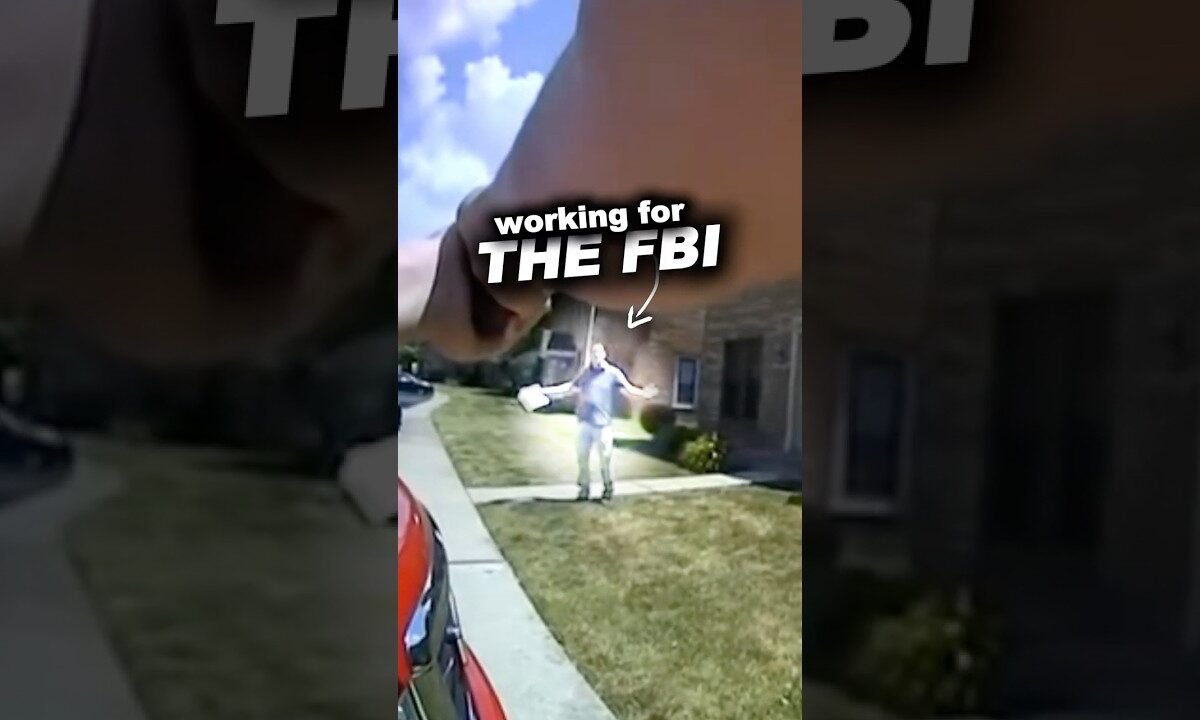
When cops encounter an Fbi agent.
Short Produced by Identifed Crime
IDENTIFIED CRIME delivers exclusive bodycam footage, real courtroom moments, and true-crime breakdowns, edited to give clear context fast.
RESPECT IN THE COMMENTS
People shown in these videos may be dealing with mental health issues, substance use, or a single bad decision. A clip doesn’t define a life — keep it respectful.
REMOVAL REQUESTS
We support the “right to be forgotten” approach where appropriate. If you’re featured in a minor incident and want the video reviewed for removal, email us with details.
VIEWER NOTICE
Viewer discretion advised. Content is presented for public interest, commentary, and educational/documentary purposes.
Incident Summary:
The man won $1.6 million in damages.
On July 7, 2020, ATF Special Agent James Burk went to a Columbus, Ohio address as part of his work to retrieve a shotgun that had been reported/flagged as illegally owned and was expected to be surrendered. The resident, seeing a plainclothes man at the door, called 911, and Columbus Police officers Joseph Fihe and Kevin Winchell were dispatched.
Bodycam from the responding officers shows the encounter escalating fast: Burk raises his hands and repeatedly tells them he’s a federal agent and that his credentials are on him, but the officers keep him at gunpoint, order him to the ground, and then use a TASER while handcuffing him. He is placed in the back of a cruiser and held for roughly an hour before being released—with no criminal charges filed against him (so while the video is often described online as an “arrest,” the case record describes it as an unlawful detention/seizure).
Burk filed a federal civil-rights lawsuit in December 2020, alleging excessive force and unlawful detention, and also claiming the bodycam footage was later shared around to mock and embarrass him.
In November 2024, a Columbus jury found the officers used excessive force and unlawfully detained him and awarded $1.6 million in damages, and the city later approved a post-trial settlement of about $1.8 million to cover items like fees/interest rather than continue appeals.
source