


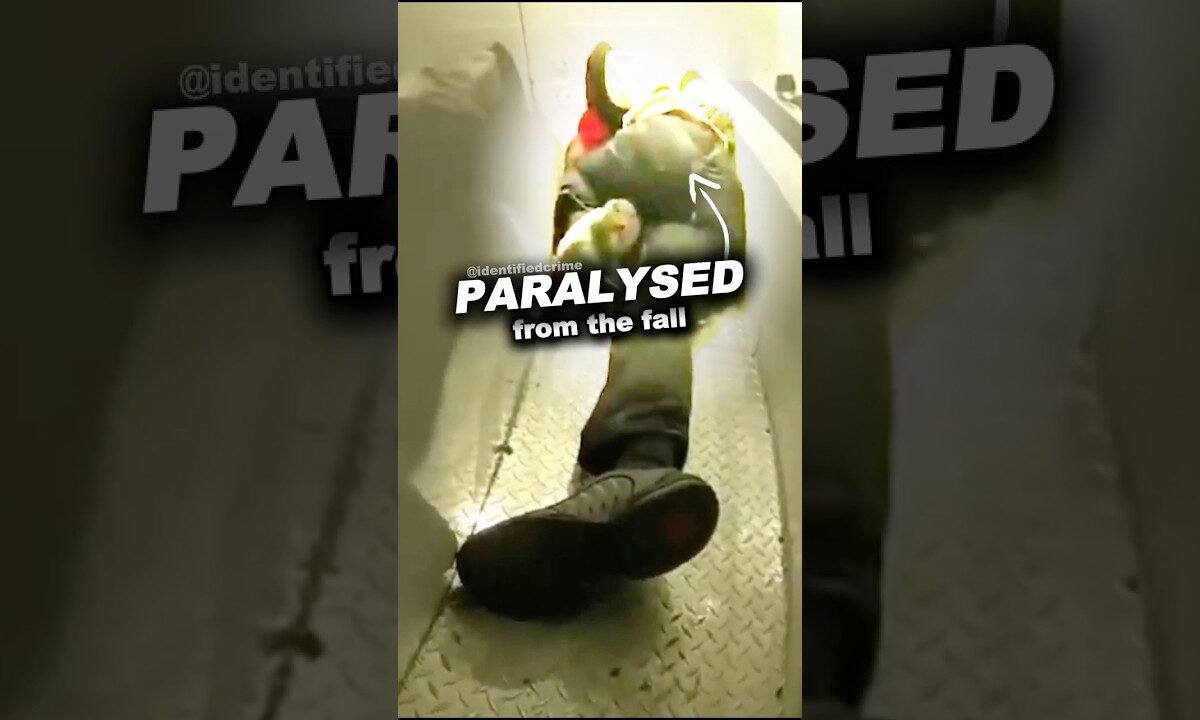
Cops Reckless Driving Leaves Man Paralysed.
Short Produced by Identified Crime.
IDENTIFIED CRIME delivers exclusive bodycam footage, real courtroom moments, and true-crime breakdowns, edited to give clear context fast.
RESPECT IN THE COMMENTS
People shown in these videos may be dealing with mental health issues, substance use, or a single bad decision. A clip doesn’t define a life — keep it respectful.
REMOVAL REQUESTS
We support the “right to be forgotten” approach where appropriate. If you’re featured in a minor incident and want the video reviewed for removal, email us with details.
VIEWER NOTICE
Viewer discretion advised. Content is presented for public interest, commentary, and educational/documentary purposes.
Incident Summary:
On June 19, 2022, in New Haven, Connecticut, police arrested Richard “Randy” Cox at a Lilac Street block party and transported him in a prisoner conveyance van that did not have seatbelts. During the drive, the van braked hard at the intersection of Division and Mansfield to avoid a collision, and Cox, who was handcuffed and unsecured, was thrown headfirst into the metal partition, suffering a catastrophic neck injury that left him paralyzed from the chest down.
Body-worn and station video later showed Cox pleading that he couldn’t move, while officers accused him of being drunk or faking and continued the transport to the station instead of calling an ambulance to the scene. At the detention facility, officers pulled him from the van, put him in a wheelchair, and moved him into a holding cell before he was ultimately taken for medical care. Two officers, Jocelyn Lavandier and Luis Rivera, were later fired for conduct violations tied to the incident, and five officers faced misdemeanor criminal charges such as reckless endangerment and cruelty to persons.
Cox’s attorneys filed a $100 million civil lawsuit against the city and involved officers, and the case later settled for $45 million, which his lawyers publicly described as the largest settlement in a police misconduct case. That settlement is far larger than Minneapolis’s $27 million civil settlement with George Floyd’s family, which had been widely described as a record-setting pre-trial civil-rights wrongful-death settlement at the time.
Following the incident, New Haven adopted stricter prisoner-transport rules, including mandatory seatbelts and an explicit requirement to ask detainees if they need medical help and to get EMS immediately when they do, and courts in Connecticut later rejected attempts by officers to use a diversion program that could have erased the charges.
source