


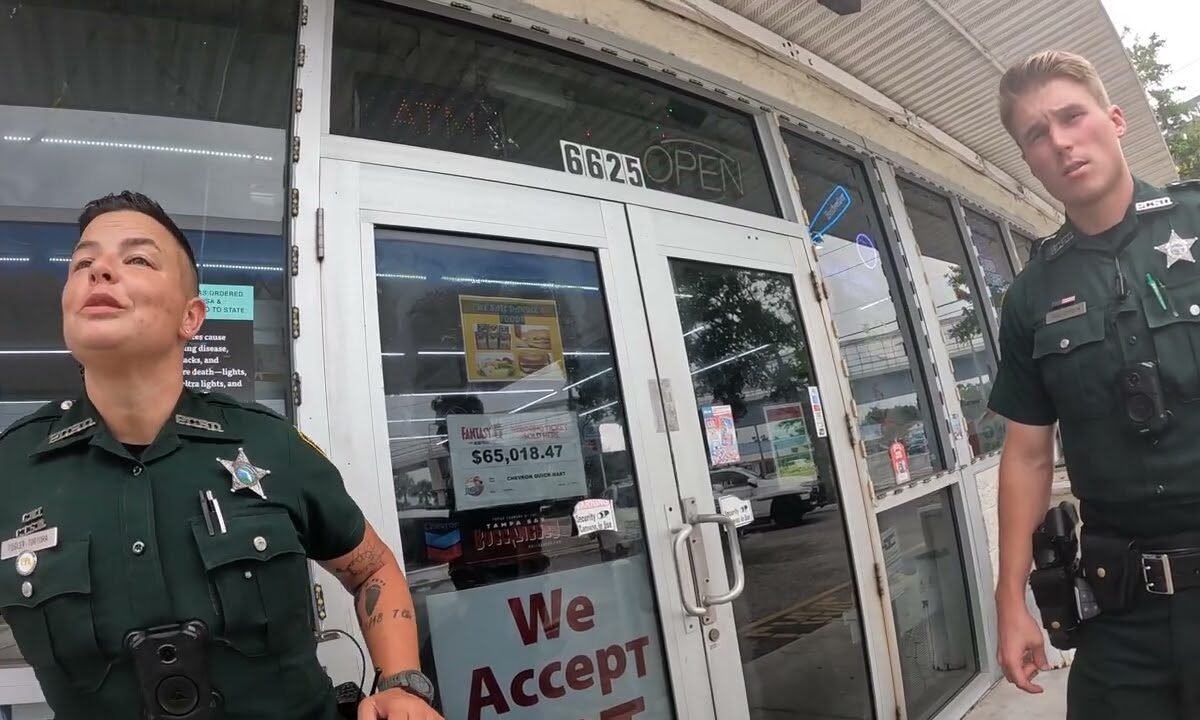
Under the Americans with Disabilities Act (ADA), liquor stores are classified as “public accommodations” because they are retail establishments that provide goods to the public.
These Pinellas County Florida Officers were refreshing to deal with. It was not my goal to cop watch or produce content surrounding my service dog in training “Spotted White Foot” When I say in training it’s always a part of our routine. The real difficulty I have encountered is how much it triggers me to explain his job especially without having to disclose my disability. Because describing what he is trained to do, block, bark if necessary but only towards chaotic situations, stand on my shoulder or chest for pressured contact, licking my face hands or any bare skin, licking your face, our coming up to you if your are getting stressed about me being stressed, He will do what ever he can to bring calm to the situation with taking a forward on guard position as a last resort.
All of this responses to what task he is trained for has lead directly to repeated lectures about emotional support animals and escalated violations of the ADA. And i’m not out here with the intent to speak out or document because I feel uncomfortable about putting my disability and my anxiety on display for the world to see. To travel freely with a service dog is going to thrust me into situations almost everywhere we go because he is small in size.
Still both officers were not phased by my repeated explanations which tend to happen when I’m stressed. Calming down from defensive posturing and breathing become a real problem for me to reclaim my system and achieve a sense of calm.
In regards to the rules of the ADS I have to point out it’s a Fail Under the Americans with Disabilities Act (ADA), liquor stores are classified as “public accommodations” because they are retail establishments that provide goods to the public. As such, they are legally required to permit service dogs (and, in some cases, miniature horses) to accompany individuals with disabilities in all areas of the store where customers are normally allowed to go.
So I may have grown up in a barn but I didn’t want to argue with law enforcement because I have found that educating those who are directed to police the people vs business.
What’s my rating in this encounter with the law in Florida. I’m gonna have to give these Officers in Green an C even though I would have liked it to be higher, because they did to a good job distracting me towards My Service Animal AKA “Footer” by engaging with him in a loving way which deescalated the situation helped me feel heard and continued my education on where and when I need to avoid feeling like i’m having my rights by the American Disabilities Act violated. This knowledge will go forward as I educated myself and you on what Public means and what kinds of businesses fall under that category.
I will need to get educated on what my legal recourse is in these situations because in the end this business to the public is now affirmed in his belief that he can violate the ADA laws in this country and these officers will continue to also violate the law through a lack of enforced education. If you have advice on filing or submitting claims in these types of cases I would also love to show you talking about it on this channel as well as connecting with you for future collaboration.
Your comments and experiences are kindly invited I would love to hear about your experience and to continue to build a community of friends and fellow travelers, nomads, van lifers, and those who spend every day living with and training service animals. Thank you for watching.
The following is in place to educate anyone interested in what public means especially in regards to your service animal and in some cases your miniature pony. God Bless America 🇺🇸
PTSD service dogs are trained to mitigate symptoms of Post-Traumatic Stress Disorder by performing specific tasks, such as interrupting flashbacks or nightmares, providing deep pressure therapy to reduce anxiety, creating personal space in crowds, and scanning environments for safety. They help handlers regain independence by disrupting anxiety attacks and providing physical security.
Here is a list of public types of businesses and facilities required to allow service animals:
Restaurants, bars, and cafes
Retail stores and shops (grocery, clothing, electronics)
Hotels, motels, and lodging facilities
Theaters, cinemas, and concert halls
Sports facilities and stadiums
Hospitals, clinics, and medical offices
Schools (K-12 and private), colleges, and universities
Public transportation and terminals (buses, taxis, trains)
Places of recreation (gyms, fitness centers, zoos, parks)
Libraries, museums, and galleries
Banks and financial institutions
Service establishments (hair salons, dry cleaners, repair shops)
source