


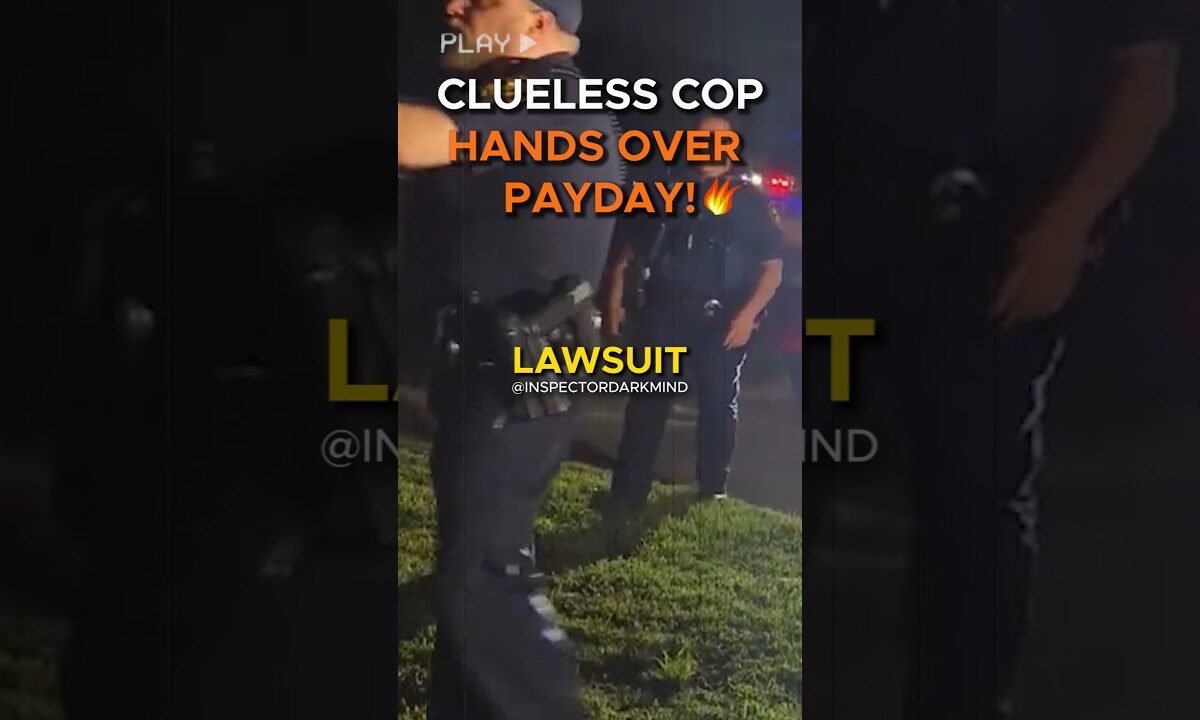
What starts as a simple wrong-house misunderstanding should have ended the moment the first officers confirmed no crime had happened and walked away. Instead, a late-arriving sergeant turned a closed-out encounter into a fresh detention over nothing more than a rude goodbye.
At the center of this video is a basic Fourth Amendment question: once officers have already disengaged and the original reason for the stop is over, can a supervisor restart the whole thing without new Reasonable Articulable Suspicion? Under Rodriguez v. United States, the answer is no. A stop cannot be extended or revived unless there is an independent legal basis to do so.
That is what makes this interaction so important. The initial officers had already accepted that the call was based on a misunderstanding. The encounter was over. But after the citizen dismissed the sergeant and tried to move on, the situation was suddenly reframed as “interference,” with a camera monopod treated like a possible weapon to support a Terry-style frisk. The legal problem is obvious: disrespect is not a crime, and a person cannot interfere with an investigation that had already been resolved and terminated.
The video shows how fast a voluntary encounter can be turned back into a detention when an officer takes a personal comment as a challenge to authority. It also raises a broader issue that appears again and again in civil rights litigation: the use of vague officer-safety language and thin weapon claims to justify a seizure that lacks a real criminal predicate.
At its core, this is a strong example of how ego, not evidence, can create major constitutional exposure. Once the original contact was finished, any new seizure required new facts suggesting actual criminal activity. Without that, the re-seizure becomes the real issue.
Legal Focus: 4th Amendment (Unlawful Prolongation) / 1st Amendment (Protected Speech) / Interference Statutes
Scenario: Wrong House Mistake vs. Late-Arriving Sergeant’s Ego Arrest
Disclaimer: This footage is shared for educational and journalistic purposes to promote constitutional literacy and legal accountability. The content is intended to demonstrate real-world applications of civil rights and is not a substitute for professional legal advice.
source