


Canada and Mexico hit back against Trump’s trade tariffs as Beijing vows ‘countermeasures’
Canada, Mexico and China have promised to hit back after the imposition of sweeping US tariffs announced by Donald Trump on Saturday.
Trump claimed the move was in response to a “major threat” from illegal immigration and drugs. Canadian and Mexican exports to the US will face a 25% tariff starting Tuesday, although energy resources from Canada will have a lower 10% levy.
Goods from China, which already face various rates of duties, will see an additional 10% tariff. A tariff is a domestic tax placed on goods as they enter a country, proportional to the value of the import.
Trump invoked the International Emergency Economic Powers Act in imposing the tariffs, with the White House saying “the extraordinary threat posed by illegal aliens and drugs, including deadly fentanyl, constitutes a national emergency.”
The aim is to hold all three countries “accountable to their promises of halting illegal immigration and stopping poisonous fentanyl and other drugs from flowing into our country,” the White House added.

Agence France-Presse (AFP) reported a statement from China’s commerce ministry that it would take “corresponding countermeasures” and file a claim against Washington at the World Trade Organization.
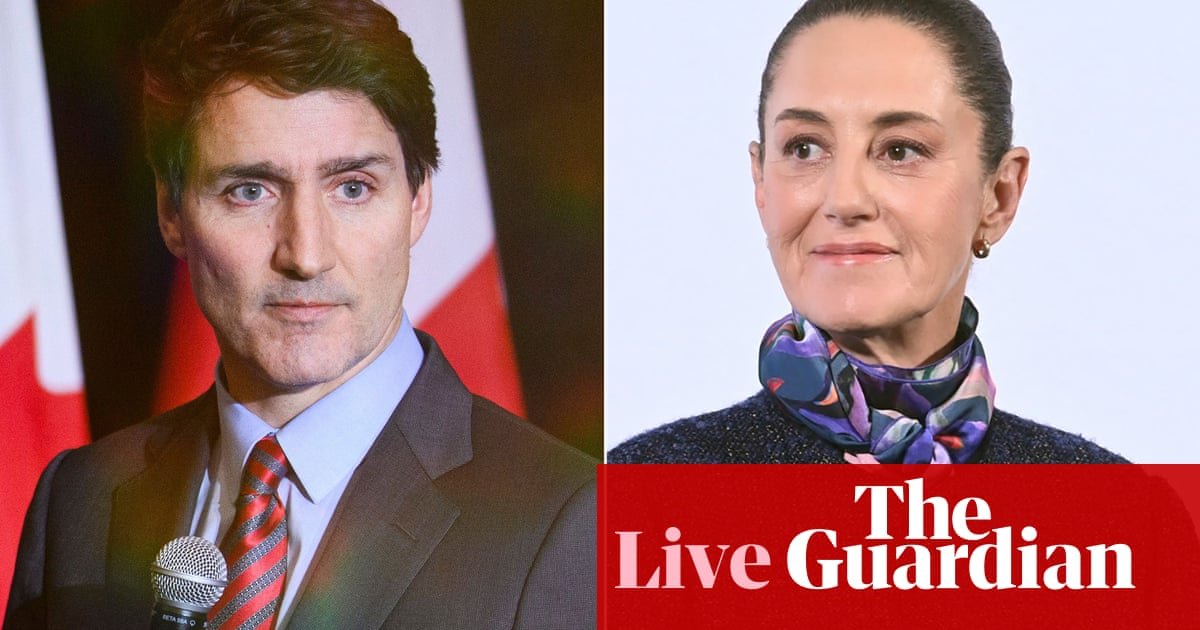
Mexican President Claudia Sheinbaum announced that her country would impose retaliatory tariffs.
Sheinbaum said she had told her economy minister “to implement Plan B that we have been working on, which includes tariff and non-tariff measures in defense of Mexico’s interests.”
Canadian Prime Minister Justin Trudeau – who spoke with Sheinbaum – separately said his country would hit back with 25% levies of its own on select American goods worth Can$155 billion (US$106.6 billion), with a first round on Tuesday followed by a second one in three weeks.
“We’re certainly not looking to escalate. But we will stand up for Canada, for Canadians, for Canadian jobs,” he said, as he warned of a fracture in longstanding Canada-US ties.
Key events
China, Mexico and Canada accounted for more than 40% of imports into America last year. US President Donald Trump, who has also threatened to impose tariffs against EU nations, says the new tariffs will help grown the US economy, raise tax issue and protect American jobs. However, critics, including many economists, have warned that additional costs will be passed onto American consumers, exacerbating an already acute cost of living crisis.
My colleague Lauren Aratani has done this useful explainer exploring how US consumers will be affected by the tariffs, why Trump is using them to enact his policy agenda and how other countries have responded to the US president’s announcement.
Canada and Mexico hit back against Trump’s trade tariffs as Beijing vows ‘countermeasures’
Canada, Mexico and China have promised to hit back after the imposition of sweeping US tariffs announced by Donald Trump on Saturday.
Trump claimed the move was in response to a “major threat” from illegal immigration and drugs. Canadian and Mexican exports to the US will face a 25% tariff starting Tuesday, although energy resources from Canada will have a lower 10% levy.
Goods from China, which already face various rates of duties, will see an additional 10% tariff. A tariff is a domestic tax placed on goods as they enter a country, proportional to the value of the import.
Trump invoked the International Emergency Economic Powers Act in imposing the tariffs, with the White House saying “the extraordinary threat posed by illegal aliens and drugs, including deadly fentanyl, constitutes a national emergency.”
The aim is to hold all three countries “accountable to their promises of halting illegal immigration and stopping poisonous fentanyl and other drugs from flowing into our country,” the White House added.
Agence France-Presse (AFP) reported a statement from China’s commerce ministry that it would take “corresponding countermeasures” and file a claim against Washington at the World Trade Organization.
Mexican President Claudia Sheinbaum announced that her country would impose retaliatory tariffs.
Sheinbaum said she had told her economy minister “to implement Plan B that we have been working on, which includes tariff and non-tariff measures in defense of Mexico’s interests.”
Canadian Prime Minister Justin Trudeau – who spoke with Sheinbaum – separately said his country would hit back with 25% levies of its own on select American goods worth Can$155 billion (US$106.6 billion), with a first round on Tuesday followed by a second one in three weeks.
“We’re certainly not looking to escalate. But we will stand up for Canada, for Canadians, for Canadian jobs,” he said, as he warned of a fracture in longstanding Canada-US ties.
Source link